


Queen’s Park Bridge, spans 136 meters over the River Roch, linking Heywood and Rochdale. Constructed in the early 1930s, the bridge is a key gateway to Heywood’s Queen’s Park. A recent £4 million repair project, focused on bridge preservation, including structural & concrete repairs, cathodic prevention installation, parapet replacement, installation of new lighting columns, and removal of concrete barriers, ensuring the long-term durability and safety of the bridge.
Location
Client
Completed
Structure

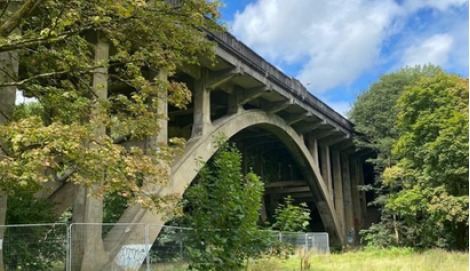
A detailed inspection of the structure revealed significant deterioration, most notably spalling and delamination to the underside piers and braces, compromising both durability and long-term performance. The assessment also highlighted the unusual formation of concrete upstands, presenting additional challenges for effective repair. When the failed bridge deck waterproofing was removed, corrosion activity on the reinforced concrete spans was also uncovered. To address the identified defects, a comprehensive repair and protection strategy was developed.
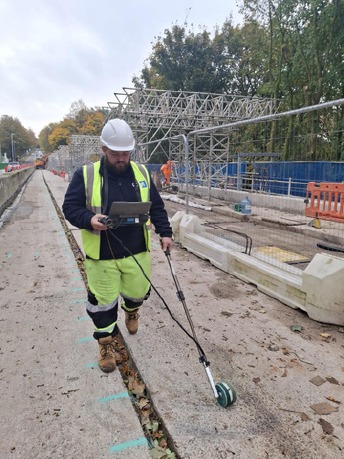

Concrete repairs were carried out in conjunction with the installation of PatchGuard 350 anodes around the periphery of the patch, protecting steel adjacent to patch repairs from incipient corrosion, reducing the risk of future repairs. A half-cell potential survey was undertaken across the deck to inform the targeted application of realkalisation and cathodic prevention measures to the top deck. High-risk areas were protected using a DuoGuard hybrid anode system, ensuring effective protection of at risk reinforcement. The failed waterproofing system was replaced with a new, robust membrane to prevent further water ingress. By installing Hybrid anodes strategically alongside PatchGuard units, this design provided a targeted, low-maintenance and effective system of ongoing corrosion control and long-term durability enhancement without the need for complicated electrical control systems.

PatchGuard anodes will protect against the incipient anode effect, caused by the patch repair material being chemically different to the host concrete. Without protection, the areas surrounding these repairs often deteriorate within 5 years. The DuoGuard system is initially powered to rapidly passivate the steel, bringing corrosion rates into the passive range in around 1 to 3 weeks. The passivity will then be enhanced by connecting the anode to the steel, giving a naturally reactive galvanic system, with the potential to be monitored with our MN15 reference electrodes, without the need for costly maintenance and complex electronics. This system will increase durability without excess maintenance costs, while having the potential to repower the system at a future date if needed. The use of half-cell potential survey data ensured that these corrosion management measures were applied in a highly targeted manner, focusing resources where future corrosion risk was greatest. This approach provided a robust and durable outcome while also representing a cost-effective solution by maximising the efficiency of repair and protection works.

Patchguard™ Galvanic Anode, the unique corrosion repair solution for patch repairs.
Find out more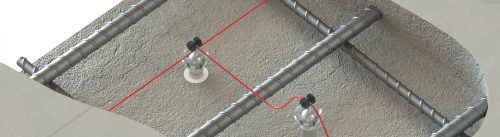
DuoGuard™ Hybrid Anode halts reinforced concrete corrosion for targeted protection.
Find out moreFor assistance and guidance from the industry experts please leave your details below and we’ll be in touch.
 NZ Transport Agency and Causeway Alliance
 Cracking, delamination, spalling and section loss
 DUOGUARD™